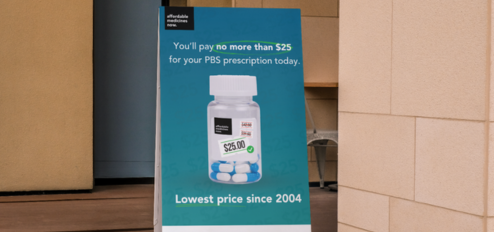
There’s good cost of living news coming your way. From 1 January 2026, the maximum out-of-pocket cost for PBS prescription medicines will drop from $31.60 to $25. That’s the lowest price Australians have paid since 2004 — and it’s a big win for your wallet. And for concessional patients, the annual CPI increase is frozen until 2029. This means that there is no increase to the $7.70 co-payment concessional patients currently pay.
This change is part of the Pharmaceutical Benefits Scheme (PBS), a government program that helps make essential medicines more affordable. For Australians who aren’t on concession cards, this price drop could mean real savings over the year, especially if you or your family have multiple prescriptions.
What is the PBS?
The Pharmaceutical Benefits Scheme (PBS) is an Australian Government program that subsidises the cost of many prescription medicines. It ensures that everyone has access to affordable, high-quality medicines, regardless of income or location. The PBS covers thousands of medicines for a wide range of conditions, from chronic illnesses to short-term conditions.
When you pick up a PBS-listed medicine at your community pharmacy, the government pays part of the cost, and you pay the remaining amount — known as the co-payment. This system helps keep essential medicines affordable for all Australians.
Why the price drop matters
Healthcare costs can add up quickly, especially if you need multiple prescriptions each month. For many Australians, the cost of medicines can be a real strain on the household budget. Before the price drop, a study found one in five Australians skipped their prescription due to the cost.
By reducing the PBS co-payment, the government is making it easier for people to access the medicines they need without sacrificing other essentials like food, rent, or utilities.
This is only the second-ever PBS price drop in history. The first happened in 2023, when the maximum cost fell from $42 to $30.
This second price drop is a clear sign that making healthcare accessible is a priority, and it means fewer Australians will have to make tough choices about their health.
How much could you save with the new price?
If you fill just one PBS prescription each month, you’ll save up to $6.60 per script starting in January. Over a year, that’s nearly $80 back in your pocket. If you take two PBS medicines regularly, that’s up to $158.40 in annual savings. For families managing multiple prescriptions, the savings can be even more substantial.
These savings will provide much-needed relief for households. That extra money could go towards groceries, bills, or even a little breathing room in your budget.
What are the new PBS prices from 1 January 2026?
Here are the new prices of PBS medicines:
| Category | From Jan 1, 2026* |
|---|---|
| General patients | $25.00 |
| Concessional patients | $7.70 |
| Closing the Gap (General patients) | $7.70 |
| Closing the Gap (Concessional patients) | $0.00 |
*Maximum cost per prescription
The new prices apply automatically at your community pharmacy. You don’t need to do anything special — just bring your prescription as usual.
What is the PBS safety net?
If you and your immediate family fill many PBS prescriptions throughout the year, you might reach the PBS Safety Net threshold. This means you can access your PBS prescriptions at a lower price for the rest of the year. The general PBS Safety Net price is $7.70, and prescriptions are free for those with a Pension, Concession or Veteran’s card.
In 2025, the PBS Safety Net threshold is $1,694.00 for the general public and $277.20 for those with a Pension, Concession or Veteran’s card. These are indexed every year, and the updated thresholds will be published for 1 January 2026.
The Safety Net scheme covers a calendar year, so it resets every January. Your regular pharmacy monitors your safety net threshold for the prescriptions they dispense for you.
To find out more, see the PBS Safety Net thresholds webpage.
What are the PBS prescription prices for Aboriginal and Torres Strait Islander people?
For Aboriginal and Torres Strait Islander people registered in the Closing the Gap program, PBS prescriptions are usually free if you have a Pension, Concession or Veteran’s card. If you don’t have one of these cards, the price is $7.70.
To register for the Closing the Gap program, Aboriginal and Torres Strait Islander people must visit their doctor or an Indigenous Health Services provider. The registration process is simple, and you only need to do it once, no matter where you are in Australia. Once registered, you can access the program benefits for your PBS prescriptions.
For more details about how the program works, see the Closing The Gap webpage.
Why is this important for you?
Lower medicine costs mean fewer tough choices. No one should have to decide between buying their medication and paying for groceries or rent. This price drop is designed to ease that burden and improve health outcomes for Australians. When medicines are affordable, people are more likely to take them as prescribed, which can prevent complications and reduce hospital visits.
How can you take advantage of this change?
From January, simply visit your local community pharmacy as usual. The new price will automatically apply to eligible PBS medicines. If you’re unsure whether your medicine is covered, your community pharmacist can help you check and explain your options.
Ready to save?
Book a visit with your local community pharmacy today and make sure your prescriptions are up to date.
References:
- Pharmaceutical Benefits Scheme: https://www.pbs.gov.au